“I’ve been told it’s just IBS, but I’m not sure. Something just doesn’t feel right.”
“My symptoms get worse around my period, and yet, nobody seems to think that matters.”
“I feel like I’ve tried everything. Diets, probiotics, vitamins and every stress technique under the sun. But nothing is working.”
If you have spent years managing what you have been told is irritable bowel syndrome (IBS), yet your symptoms refuse to follow the usual patterns, you are not imagining things. Many women with endometriosis are initially diagnosed with IBS or told their symptoms are stress-related or dietary. This happens because the two conditions share remarkably similar symptoms, and standard tests often come back normal.
It can be very frustrating to be told everything looks fine while you continue to suffer. There is growing evidence that for many women, the answer does not lie in the gut alone but in a condition that affects the pelvic organs.
Why are endometriosis and IBS so often confused?
Both endometriosis and IBS can cause chronic pelvic and abdominal pain, bloating, constipation, diarrhoea and discomfort after eating. When a GP hears these symptoms, IBS is often the first diagnosis considered. It makes clinical sense as a starting point.
The challenge is that endometriosis, a condition where tissue similar to the womb lining grows in other areas of the body, frequently affects the bowel and pelvic organs. This means bowel symptoms in endometriosis can look identical to IBS. Bloating, painful bowel movements, alternating constipation and diarrhoea as well as nausea after meals; all of these can occur with either condition.
Research consistently shows that women with endometriosis are two to three times more likely to also meet the diagnostic criteria for IBS compared to women without endometriosis. Studies suggest that somewhere between nine and fourteen per cent of women with one condition also have the other. Both conditions involve chronic inflammation and what doctors call visceral hypersensitivity, meaning the nerves supplying the pelvic and gut organs become more sensitive to pain signals.
Because IBS is diagnosed based on symptoms rather than a specific test, many women with undiagnosed endometriosis meet the IBS criteria perfectly. They receive a diagnosis that explains part of what they are experiencing, but misses the underlying cause.
What symptoms suggest this might be more than IBS?
The most significant clue is timing. If your symptoms follow a pattern linked to your menstrual cycle, this deserves attention.
Ask yourself whether you notice:
- Symptoms that consistently worsen in the days before or during your period
- Painful periods that have progressively worsened over time
- Pain during or after sex
- Pain when opening your bowels, particularly around menstruation
- Pelvic pain that feels deeper than typical stomach cramps
- Bloating that seems hormonal rather than food-related
- Difficulty conceiving, alongside bowel or pelvic symptoms
IBS symptoms can fluctuate with stress, certain foods and hormonal changes. But when pain and bowel disturbance reliably intensify with each menstrual cycle, we would recommend that you follow that thread. Endometriosis tissue responds to the same hormonal signals as the womb lining, which explains why symptoms often flare each month predictably.
Another telling sign is when standard IBS treatments fail to make a meaningful difference. If dietary changes, antispasmodics and stress management have not improved things after a reasonable trial, it may be time to consider whether something else is contributing.

Licensed under the Unsplash+ License
How does misdiagnosis happen so easily?
The average time to receive an endometriosis diagnosis in the UK has now reached nine years and four months, according to a report published by Endometriosis UK in March 2026. This represents an increase from eight years in 2020, with diagnosis times worsening rather than improving despite growing awareness.
Several factors contribute to this delay. First, there is no simple blood test or scan that definitively diagnoses endometriosis in the way you might test for diabetes or a thyroid condition. Standard blood tests typically return normal. Basic ultrasound scans may appear unremarkable unless there are visible cysts or significant deposits.
Second, the symptoms are common and overlap with many other conditions. Pelvic pain, bloating and bowel changes affect large numbers of women for a variety of reasons. GPs see these presentations frequently, and IBS or food intolerance are logical first considerations.
Third, there remains a tendency within healthcare to normalise menstrual pain or attribute symptoms to stress and anxiety. In Endometriosis UK’s survey, eighty-three per cent of respondents reported being told by a healthcare professional that they were making a fuss about nothing or that their symptoms were normal. This dismissal, while not intentional, delays investigation and leaves women struggling without answers.
For women from communities of colour, the diagnostic delay is even longer, averaging eleven years. This disparity reflects broader inequalities in how pain is assessed and believed across different patient groups.
When should I ask for further investigation?
If you have been managing IBS-type symptoms for more than a year without significant improvement, it is reasonable to ask your GP whether endometriosis should be considered. This is especially true if:
- Your symptoms are cyclical and clearly linked to menstruation
- Pain is affecting your quality of life, relationships or work
- You have a family history of endometriosis
- You are experiencing fertility difficulties alongside pelvic symptoms
- You have tried standard IBS treatments without adequate relief
A thorough history taking is the starting point. Your GP should ask detailed questions about when symptoms occur, how they relate to your cycle and whether you experience pain with intercourse or bowel movements. A pelvic examination may be offered to check for tenderness or any obvious abnormalities.
Depending on what the assessment reveals, referral to a gynaecologist for further evaluation may be appropriate. Transvaginal ultrasound performed by someone experienced in detecting endometriosis can identify certain types of the condition, particularly when it affects the ovaries or deeper pelvic structures. MRI scanning is sometimes used for more detailed assessment.
Historically, the only way to confirm endometriosis definitively was through laparoscopy, keyhole surgery that allows direct visualisation of the pelvic organs. While this remains the gold standard for diagnosis, advances in imaging and newer diagnostic approaches mean surgery is not always the first step.

Photo by Helio E. López Vega on Unsplash
Is there a faster way to get answers?
For women who have spent years uncertain whether their symptoms are endometriosis or IBS, newer testing options offer hope.
The Ziwig Endotest® is a saliva-based test that analyses specific biomarkers to indicate whether endometriosis is likely. This non-invasive approach provides results within weeks rather than the years many women spend waiting for a diagnosis. While it does not replace clinical assessment or imaging, it can offer clarity and help guide next steps.
At Summerhill Health, we offer the Ziwig Endotest® alongside comprehensive women’s health assessments that consider your symptoms in full. Rather than looking at bowel symptoms and pelvic pain in isolation, we assess how they connect and whether a hormonal or gynaecological cause might be contributing.
What if I have both conditions?
Having endometriosis does not rule out IBS. Evidence-based research confirms that many women genuinely have both conditions simultaneously. The inflammation and nerve sensitisation caused by endometriosis can trigger or worsen IBS-type symptoms. Equally, having IBS does not mean endometriosis should be dismissed as a possibility.
The key is ensuring both conditions are identified and managed appropriately. Treating IBS while missing underlying endometriosis means you may never achieve adequate symptom control. Equally, treating endometriosis without addressing genuine IBS symptoms could leave you partially improved but still struggling.
This is why a comprehensive assessment matters. Understanding the full picture allows for a treatment approach that addresses what is actually happening rather than what has been assumed.
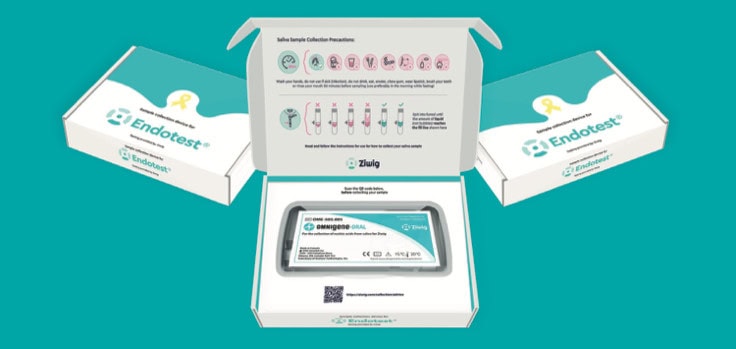
Ziwig Endotest kit for the Endometriosis test.
What can I do now?
If this article resonates with your experience, consider the following steps:
- Track your symptoms for two to three menstrual cycles, noting when they occur and their severity.
- Request a thorough review with your GP or book a consultation to discuss your symptoms in detail.
- Ask directly whether endometriosis has been considered and what investigations might be appropriate.
- Explore specialist assessment if you have been managing symptoms for an extended period without improvement. Our women’s health services include gynaecological expertise.
You should not have to spend years wondering whether what you are experiencing is endometriosis or IBS. Both conditions deserve proper investigation.
If your symptoms do not fit the pattern you have been given, if treatments are not working as expected, if your pain follows your cycle rather than your meals, it is worth looking further.
Ready to explore what is really causing your symptoms?
Book a women’s health consultation at Summerhill Health, where we take time to understand the full picture and offer testing options, including the Ziwig Endotest® for faster diagnostic clarity.
References
Endometriosis UK. The State of Endometriosis Care in the UK. March 2026. Link Accessed 13 April 2026.
Chiaffarino F, et al. Endometriosis and irritable bowel syndrome: a systematic review and meta-analysis. Arch Gynecol Obstet. Jan 2021.
DiVasta AD, et al. Overlap Between Irritable Bowel Syndrome Diagnosis and Endometriosis in Adolescents. Clin Gastroenterol Hepatol. Mar 2021.
NICE Guideline NG73. Endometriosis: diagnosis and management. Updated 2024.
Fiorillo M, et al. Inflammatory Bowel Disease and Endometriosis: Diagnosis and Clinical Characteristics. Biomedicines. 4 Nov 2024.