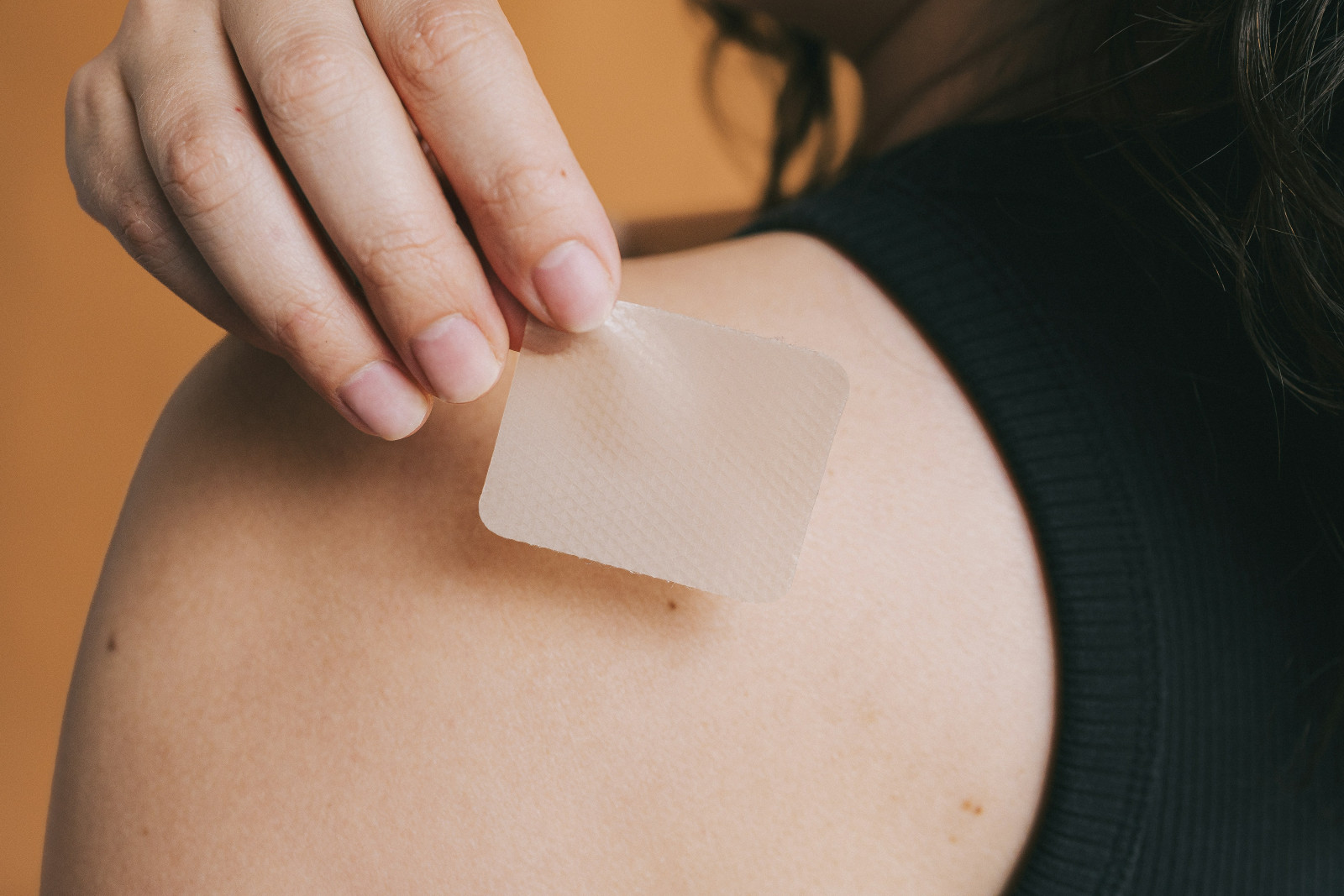
“My patch keeps peeling off in the shower.”
“Where exactly am I supposed to put this?”
“Can I still go swimming on holiday?”
If you’ve been prescribed an HRT patch or spray, you might have questions that didn’t come up during your consultation or that only occurred to you once you got home. This guide covers how to use HRT patches and sprays, including where to apply them, how to keep patches in place, what to do if something goes wrong, and when to get in touch with us.
At Summerhill Health, Dr Natalie Summerhill prescribes body-identical oestrogen patches and sprays as part of individualised menopause care. The most common options include Evorel, Estradot, and Femseven patches, as well as Lenzetto spray. Each delivers oestradiol through the skin, bypassing the digestive system and providing a steady release of hormones.
Please note: This guide provides general information only. Always follow the specific instructions your GP has given you, and contact us if you’re unsure about anything.
Why Use Patches and Sprays for HRT?
Transdermal HRT (patches and sprays) delivers oestrogen directly through your skin into your bloodstream. This has several advantages over tablets:
- It avoids the liver’s “first pass” metabolism, which means lower doses can be effective and there’s no increased risk of blood clots. For women with certain risk factors, migraines with aura or a history of gallbladder problems, transdermal options are often the safest choice.
- The steady release of hormones can also mean more stable symptom control, with fewer peaks and troughs than some women experience with tablets. If you’re still experiencing symptoms despite starting HRT, our guide on what to do when menopause symptoms persist may be helpful.
Patches vs Gel: Which Is Better?
Both patches and gel deliver oestrogen through the skin, so from a safety perspective they’re very similar. The choice often comes down to personal preference and lifestyle.
Patches are convenient if you prefer not to think about your HRT daily. You apply them once or twice a week (depending on the brand), and they work continuously. Some women find them easier to remember, particularly if they’re juggling multiple medications or have busy lives. The main drawback is visibility, as they can be seen under swimwear, and occasional adhesive issues.
Gel is applied daily, usually in the morning after showering. Some women prefer this as it becomes part of their routine, and there’s nothing visible on their skin. Gel also allows for more flexible dose adjustments, as you can easily apply a bit more or less. However, you do need to wait for it to dry before dressing, and avoid skin-to-skin contact with partners or children for a short time after application.
Lenzetto spray sits somewhere between the two. It’s applied daily like gel but dries quickly and is invisible once absorbed. It’s a good option if you want daily dosing without the waiting time of gel.
There’s no “better” option. It depends on what fits your life. If you’re finding one method difficult to stick with, it’s worth discussing alternatives during your next HRT review.
How to Apply HRT Patches
Knowing where to apply HRT patches makes a real difference to how well they stay on and how effectively they work.
- Best areas: Below the waist is ideal. Your lower abdomen, buttocks or upper thighs work well. The skin here tends to be less mobile than other areas, which helps the patch stay in place.
- Areas to avoid: Don’t apply patches to your breasts, waistline (where clothing rubs) or any skin that’s irritated, cut or has spots. Oily areas or places where you’ve recently applied moisturiser won’t hold the adhesive as well.
- Rotating sites: When you change your patch, use a different spot from last time. This gives your skin a chance to recover and reduces the risk of irritation building up. Many women find it helpful to alternate sides: left buttock one change, right buttock the next.
- How to apply Evorel patches (and Estradot or Femseven): Remove the patch from its pouch, peel off the protective backing, and press firmly onto clean, dry skin for at least 10 seconds. Run your finger around the edges to seal them down.
Licensed under the Unsplash+ License
How to Use Lenzetto HRT Spray
Lenzetto spray works differently from patches.
- Apply it to the inside of your forearm, between your elbow and wrist. If you need more than one spray, use adjacent areas on your forearm but don’t overlap them.
- Place the nozzle directly on your skin and press the button once, firmly.
- Let the area dry completely before dressing, usually around 2 minutes.
- Don’t rub the area after application.
- When you first use a new Lenzetto canister, you’ll need to prime it by pressing the spray three times (away from your face). After that, it’s ready to use normally.
How to Keep HRT Patches On
This is one of the most common questions we hear. A few practical tips:
- Clean, dry skin is essential. Apply your patch after showering, once your skin is completely dry. Don’t use moisturiser, oil or talc on that area beforehand.
- Press firmly. Hold the patch in place with your palm for at least 10 seconds. The warmth from your hand helps activate the adhesive. Run your finger around the edges to make sure they’re sealed.
- Avoid direct water pressure. You can shower and bathe with your patch on, but try not to aim the showerhead directly at it. Pat the area dry rather than rubbing.
- Watch for edge lift. If the edges start to peel but the centre is still stuck, you can press them back down. If more than half the patch has come away, it’s best to apply a new one.
Where to Put Your HRT Patch on Holiday
Yes, you can swim, bathe, and exercise with your HRT patch on. They’re designed to stay put during normal activities.
Most women find they can swim in pools and the sea without problems, though very hot tubs or saunas may loosen the adhesive more quickly. If you’re going somewhere hot, you might find the patch adhesive softens slightly. Pressing the edges back down after swimming usually solves this.
Some women take a spare patch on holiday, just in case. If visibility under swimwear concerns you, the buttock area tends to be the most discreet location.
For Lenzetto spray, avoid swimming or washing the application area for at least an hour after spraying, to allow full absorption.

Licensed under the Unsplash+ License
How to Remove HRT Patch Glue
When you peel off your patch, you might notice a sticky mark left behind. This is completely normal.
The residue usually comes off in the shower with soap and water, but if it’s stubborn, a small amount of baby oil or coconut oil works well. Rub gently, then wash the area as normal.
Avoid using nail polish remover or harsh solvents, as these can irritate your skin.
What to Expect When Starting HRT Patches
Most women notice some improvement in their symptoms within the first few weeks, though it can take up to three months for the full effect. Hot flushes and night sweats often improve first, while mood, energy, and brain fog may take longer to settle.
In the early weeks, you might experience some breast tenderness or mild nausea as your body adjusts. This usually settles within a month or two. If side effects are troublesome or persistent, get in touch, and we can discuss whether an adjustment to your dose might help.
Some women notice mild skin irritation under the patch, particularly if they use the same spot repeatedly. Rotating your application site and giving each area a week’s rest usually prevents this.
A note about progesterone: If you still have your womb, you’ll be prescribed progesterone alongside your oestrogen patch or spray. This protects the lining of your womb and is an essential part of your HRT regimen. Progesterone is usually taken as a separate tablet (such as Utrogestan) rather than being part of the patch. We have a separate guide covering progesterone in more detail.
How to Store HRT Patches and Sprays
Keep your patches in their original packaging until you’re ready to use them. Store them at room temperature, away from direct sunlight and heat. Don’t refrigerate them, and don’t use a patch if the pouch has been opened or damaged.
Lenzetto spray should be stored upright at room temperature. Don’t expose it to temperatures above 25°C or direct sunlight.
Licensed under the Unsplash+ License
Frequently Asked Questions
What if my patch falls off completely?
If your patch falls off within the first 24 hours of application, try pressing it back on. If it won’t stick, apply a new patch and keep your original change day. If it’s been on for more than 24 hours and falls off, apply a new patch and use this as your new change day.
Can I cut my patch to adjust the dose?
Cutting patches is off-license and should only be done after discussion with a specialist, as there are concerns about whether the drug is distributed evenly across the patch. If you feel your dose needs adjusting, please contact us to discuss your options.
I forgot to change my patch on time. What should I do?
If you’re a day or two late, simply apply a new patch as soon as you remember and continue with your regular schedule. If it’s been significantly longer, apply a new patch and use this as your new change day. You might notice some symptoms returning during the gap, but these should settle once you’re back on track.
How often do I need to change my patch?
This depends on which patch you’ve been prescribed. Evorel and Estradot are usually changed twice weekly (every 3–4 days). Femseven is a once-weekly patch. Follow the schedule your GP has given you.
My symptoms aren’t improving. Is my HRT working?
It can take up to 12 weeks for HRT to reach full effect. If you’ve given it adequate time and you’re still struggling, your dose may need adjusting. Have a look at our guide on signs your HRT isn’t working and get in touch to book a review.
When to Contact the Clinic
Get in touch if:
- Your symptoms aren’t improving after 8–12 weeks.
- You’re experiencing troublesome side effects that aren’t settling.
- You have persistent skin irritation at the patch site.
- You’re unsure whether your HRT is working.
- You have any questions or concerns.
Seek urgent medical advice if you experience sudden, severe headaches, chest pains, leg pains with swelling or visual disturbances. These are rare but require immediate assessment.
Need to Discuss Your HRT?
If you have questions about your patches or spray or feel your HRT might need adjusting, we’re here to help. Our same-day and evening appointments mean you don’t have to wait weeks for a review.
Contact us on 0161 552 2382 or book an appointment online.